D’MATRIX LAB

D’MATRIX LAB · Our purpose

Better food. Greater control. A healthier everyday life.

We believe people deserve to understand—and influence—what happens to their food.

D’Matrix is building a new generation of science-guided kitchen appliances to make carefully controlled food preparation accessible at home. Our purpose is to help people prepare food with greater confidence, choose their own ingredients, and build healthier habits into everyday life.

Backed by science. Built around people.

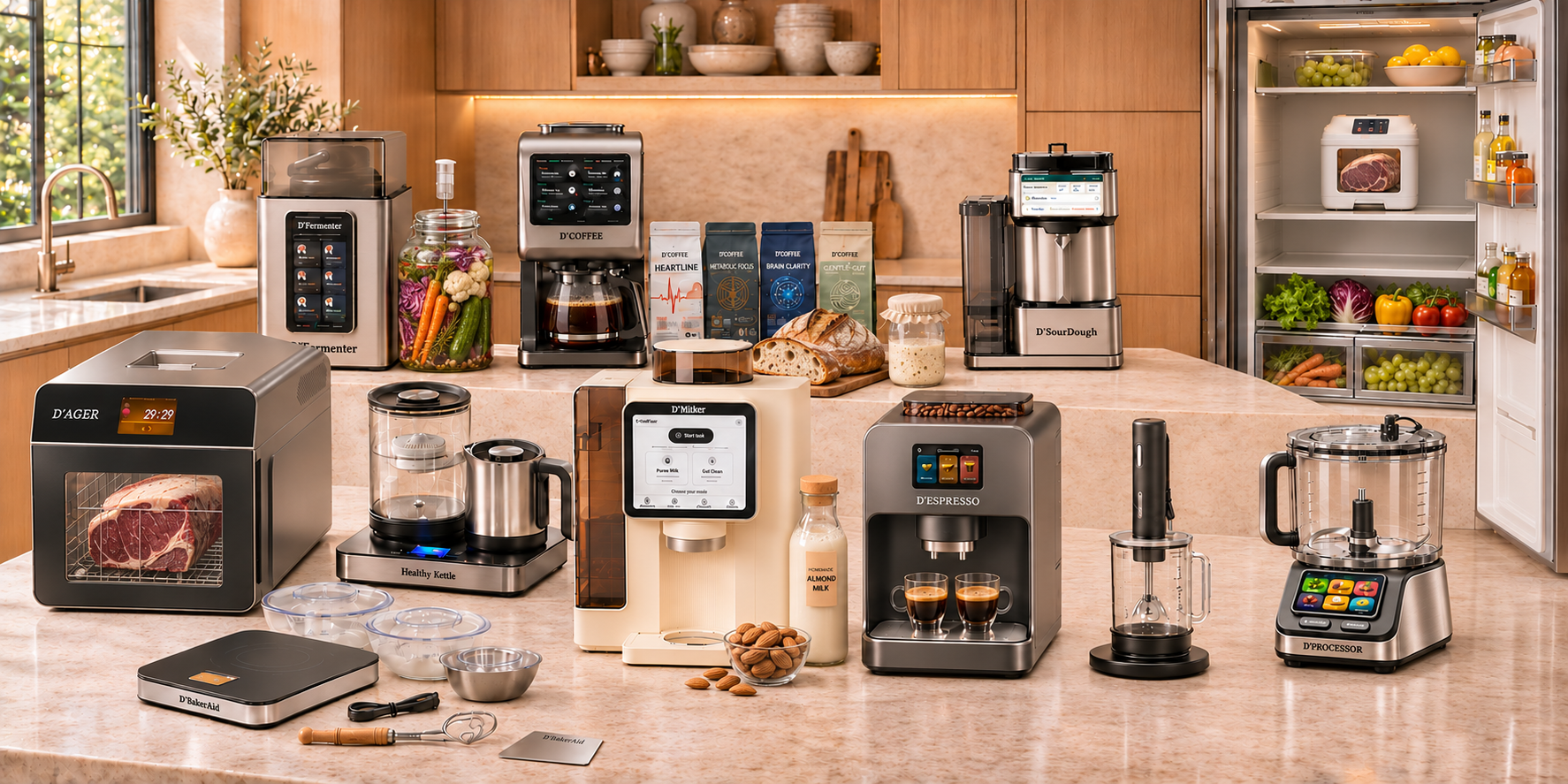
The D’Matrix product family in a home kitchen
Product-family visualization · designs and development stages vary by product.
D’Milker

Know what goes into your food.

More freedom to choose ingredients and adapt preparation to personal preferences.
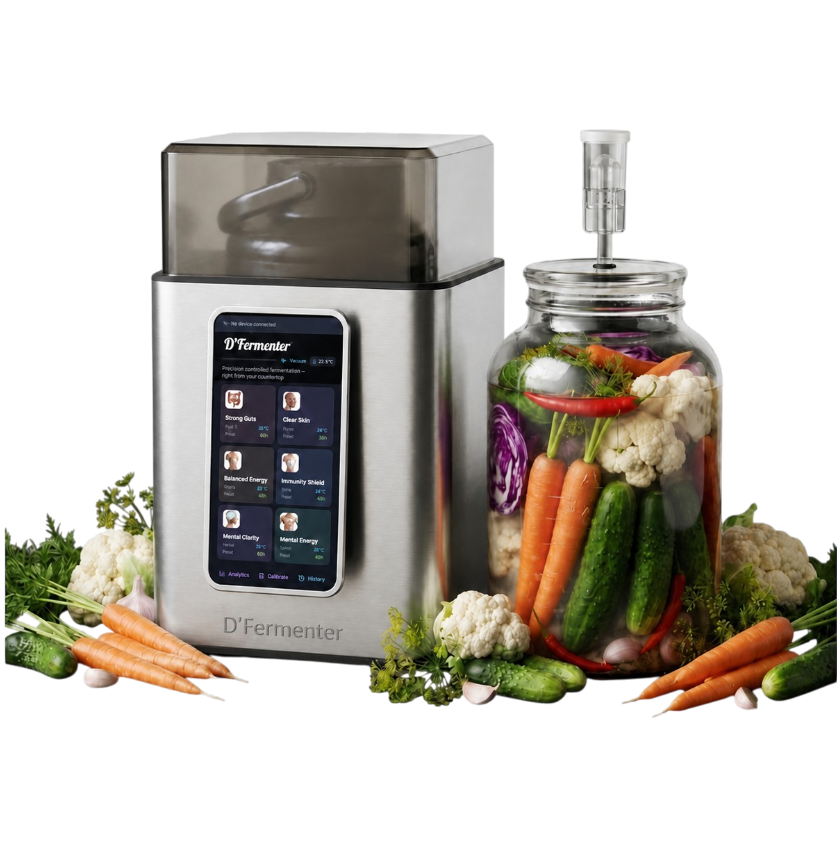
D’Fermenter

Make demanding processes easier.

Guided preparation reduces the need to manage every temperature, timing and processing step manually.
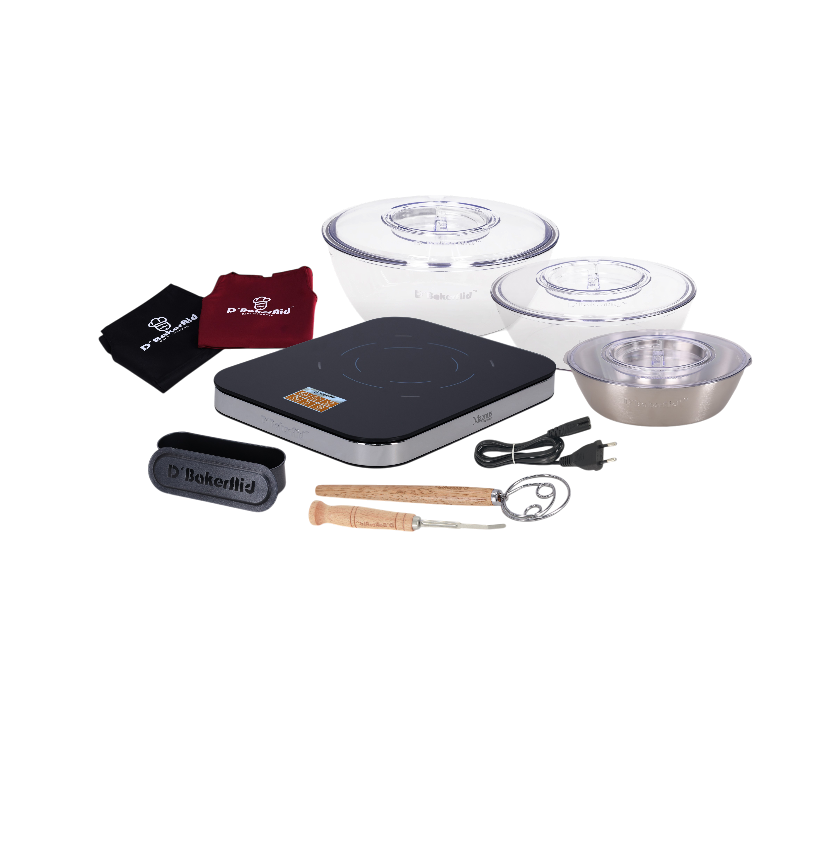
D’BakerAid

Turn good intentions into daily habits.

Thoughtful design makes preparing food at home more approachable and repeatable.

Investor presentation

D’MATRIX LAB

One commercial product.Four next launches.One shared technology platform.

D’BakerAid is commercially launched. The proposed $7M round funds completion and first manufacturing of four next products, with eight additional systems in the pipeline.

1Commercially launched product
4Next products in the proposed round
8Future pipeline systems
$7MInvestment round
35+Applications / protections · filed or drafted

Commercial proof

D’BakerAid

D’BakerAid

Commercially launched

First launch wave
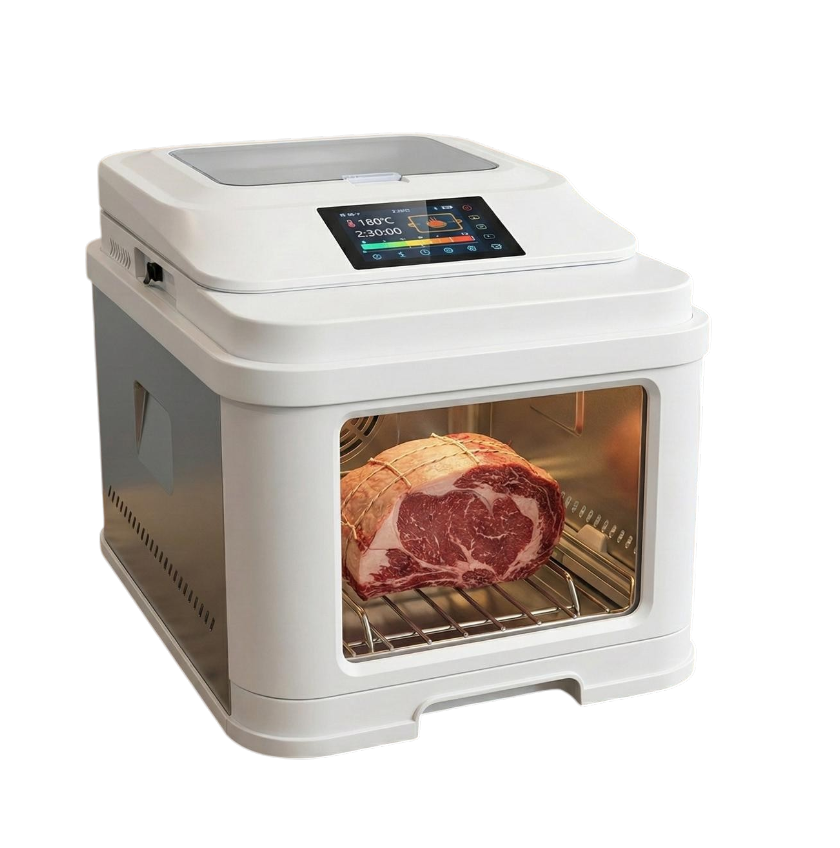
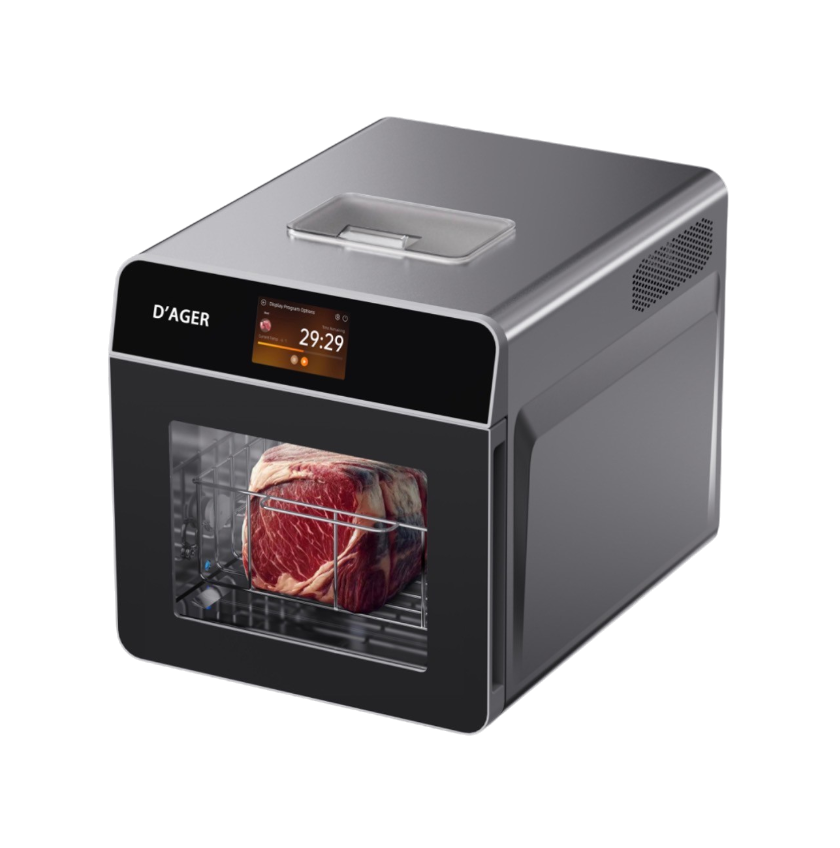
D’Ager Fridge

D’Ager Fridge

First launch wave

First launch wave

D’Ager Countertop

D’Ager Countertop

First launch wave

First launch wave

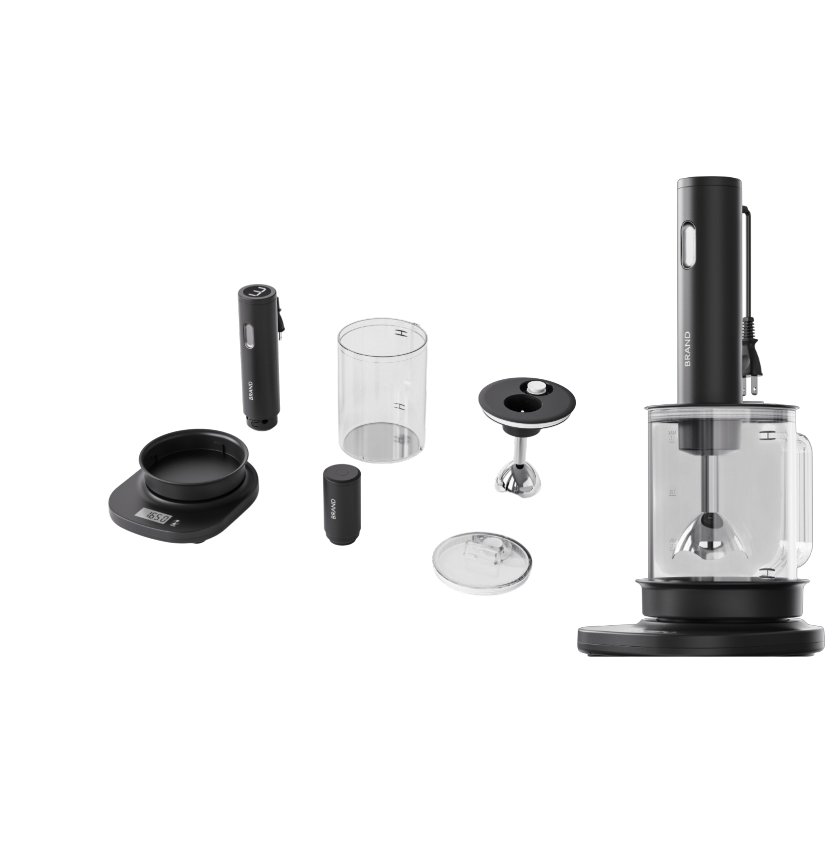
D’HandBlend

D’HandBlend

First launch wave

First launch wave

D’Fermenter

D’Fermenter

First launch wave

First launch wave · proposed round · Design render · final configuration subject to validation

Commercial proof

D’BakerAid is the first commercial proof.

Company-reported historical data · First 220 days

1,500Units sold
$480,919Net sales revenue

Company-reported historical results for the first 220 days: 1,500 units sold and $480,919 net sales. The exact calendar reporting range and transaction-level reconciliation remain to be supplied.

01Industrial / mechanical design02Manufacturing · China03Own-brand direct sales

D’BakerAid demonstrates the route from development into manufacturing and direct sales. Demand and performance for future appliances still need separate proof.

Supporting detail and assumptions

An additional 2,500 units were reported as produced or in production, not incremental sales. Initial markets were the USA and Israel; manufacturing is in China. Previously reported return and defect rates were 2% and 1%; their dated reporting basis requires confirmation. Planned D’BakerAid market launches: France and Spain from November 2026, with 500 units per market (1,000 units total).

D’BakerAid demonstrates the route from development into manufacturing and direct sales. Demand and performance for future appliances still need separate proof.

Investment thesis

One commercial product. A shared platform. A focused next launch.

Today

$3M+

Founder capital invested

13Product systems
1Commercially launched
35+Applications / protections · filed or drafted

Management reports $3M+ invested by the founder, 13 product systems and more than 35 applications and related protections, filed or drafted. Historical investment is not current cash available.

After the round

1 + 4Commercially launched + Four new products
8Eight follow-on systems

The round must prove finished-product performance, launch execution and repeatable economics. Four new products are the first funded priority; eight systems follow their own development and funding gates.

Funded plan

Consumer problem

The machine runs. The food still needs the right conditions.

What people wantWhat goes wrong todayWhat D’Matrix controls
D’BakerAid
Consistent dough and breadTiming alone does not show dough readinessTemperature, weighing and guided proofing
D’Fermenter
Repeatable fermentationSalt, acidity and endpoints need monitoringSalinity, pH, endpoint logic and cooling
D’Ager Countertop
Controlled home agingHumidity and airflow are difficult to manageTemperature, humidity, airflow and UV-C
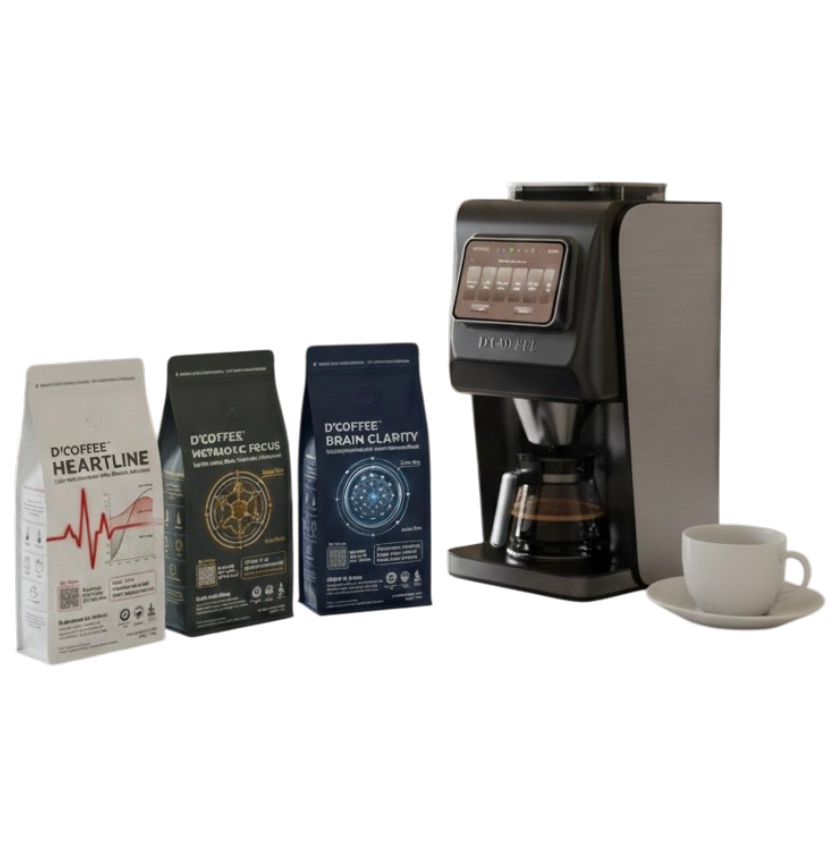
D’Coffee
Repeatable coffee preparationAir exposure and extraction varyWeighed inputs and low-oxygen processing

A timer or motor setting cannot tell a consumer whether dough is ready, fermentation has reached its endpoint or aging conditions remain suitable. Complex processes still require knowledge, monitoring and consistency.

Shared control platform

Sense the process. Apply the logic. Control the environment.

01Ingredients
02Sensors
03Control algorithms
04Managed process
05Repeatable result

Designed module reuse

D’BakerAid
D’BakerAid
D’Ager Fridge
D’Ager Fridge
D’HandBlend
D’HandBlend
D’Fermenter
D’Fermenter
D’Ager Countertop
D’Ager Countertop
D’Coffee
D’Coffee
Heating + cooling●——●●●
Humidity + airflow—●——●—
Weighing + dosing●—●●—●
pH + temperature sensing●●—●●●
Vacuum + oxygen——●——●
Guided algorithmsSafety diagnosticsIoT + OTA updates

Conventional control hardware becomes useful when the food process determines the rules. Designed reuse spans electronics, firmware, sensing, interfaces and manufacturing knowledge; quantified cost and time savings still require validation.

Example: dough temperature → sensor reading → comparison with the setpoint → heater modulation → a stable proofing environment.

Portfolio readiness

A portfolio with visible development gates.

D’Matrix: D’Ager, D’BakerAid, D’Coffee, D’Espresso, D’Fermenter, D’HandBlend, D’HealthyKettle, D’Milker, D’Processor, D’SourDough
1

Commercially launched

D’BakerAid
D’BakerAid

G10 · Commercial

4

Four new products

D’Ager Fridge
D’Ager Fridge
D’Ager Countertop
D’Ager Countertop
D’HandBlend
D’HandBlend
D’Fermenter
D’Fermenter

G06–G07 · Funded plan

8

Eight follow-on systems

  • D’Coffee
  • D’Milker
  • D’Sourdough
  • D’IQKettle
  • D’Espresso
  • D’Processor
  • D’SmartHub
  • D’Antioxidant Air Fryer

Future pipeline

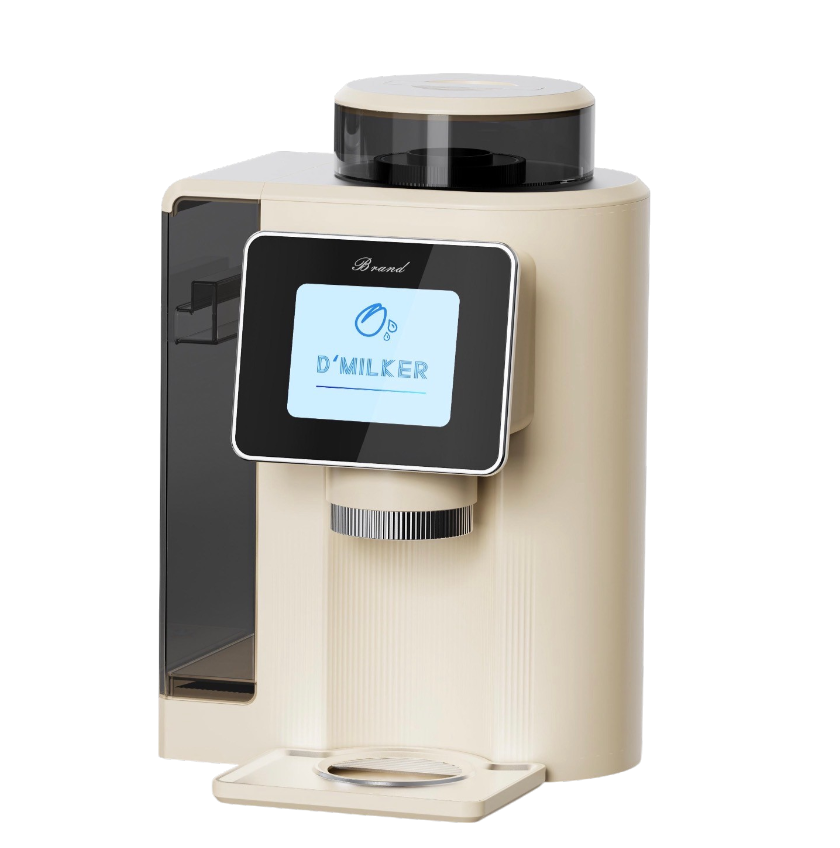
D’Milker

Current stage

D’Milker

Prototype in progress

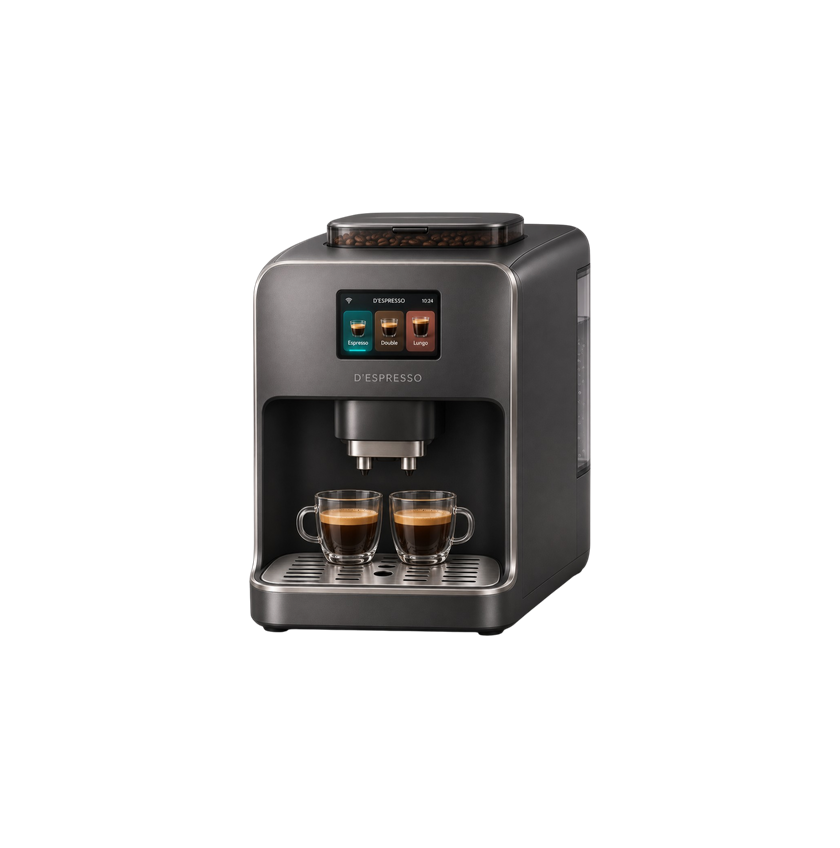
D’Espresso

Current stage

D’Espresso

Structural design in progress

Current stages are company-reported development snapshots. Concept-level laboratory work in France and Germany supports underlying food processes; final appliance validation and certification are separate requirements.

All 13 systems and development stages
ProductCurrent stageTarget retail price
D’BakerAidG10 · Commercial$299.95
D’Ager FridgeG07 · Engineering validation$349
D’Ager CountertopG06 · Integrated prototype$599
D’HandBlendG07 · Engineering validation$199
D’FermenterG06 · Integrated prototype$599
D’CoffeeG06 · Integrated prototype$999
D’MilkerPrototype in progress$699
D’SourdoughG05 · Software, UI and connectivity$599
D’IQKettleG03 · Industrial / mechanical design—
D’EspressoStructural design in progress$499
D’ProcessorG03 · Industrial / mechanical design$699
D’SmartHubG02 · Architecture—
D’Antioxidant Air FryerG02 · Architecture—

Design render · final configuration subject to validation

First launch wave

D’MATRIX LAB

Four next products. A clear path to first manufacturing.

The current stage, next gate and production path for the four products in the proposed round.

D’Ager Fridge

G07
D’Ager Fridge

Current stage

Engineering validation

Next gate

Finished-product validation and certification

D’Ager Countertop

G06
D’Ager Countertop

Current stage

Integrated prototype

Next gate

Engineering validation

D’HandBlend

G07
D’HandBlend

Current stage

Engineering validation

Next gate

Finished-product validation and certification

D’Fermenter

G06
D’Fermenter

Current stage

Integrated prototype

Next gate

Engineering validation
  1. 01

    Current stage

    Company-reported G06–G07

  2. 02

    Engineering complete

    Final engineering and design verification

  3. 03

    Validation & certification

    Finished-product performance, safety and compliance

  4. 04

    Tooling ready

    Production tooling and manufacturing readiness

  5. 05

    First manufacturing

    1,000 units per new product

D’Ager Countertop

Engineering, validation, certification and tooling

≤ 6 months + 2 months

Management plan from funding: engineering, validation, certification and tooling complete within six months; first manufacturing over the next two months. Product-specific tasks may run in parallel. Evidence and supplier schedules remain to be confirmed.

Product images are design renders. Dated prototype photographs and test evidence will be added when supplied.

Supporting detail and assumptions

Milestones from funding · Months from funding

  1. 0

    Funding received

    Program starts

  2. ≤ 6

    Completion

    Engineering, validation, certification and tooling

  3. 8

    First manufacturing

    Four products × 1,000 units

  4. ≈ 10

    Estimated retail availability

    Transit and customs: two-month planning assumption

  5. 18–24

    Follow-on milestones

    Eight systems progress through individual readiness and funding gates

The initial five are D’BakerAid plus D’Ager Fridge, D’Ager Countertop, D’HandBlend and D’Fermenter. These four new products are selected for their advanced development and the planned parallel completion.

Within six months from funded start: complete engineering, final product validation, certification and tooling for all four. Two further months: first manufacturing of 1,000 units each, 4,000 units total. Shipping, customs and market availability may follow manufacturing.

The remaining eight systems follow individual readiness, funding and commercial gates within the broader 18–24-month program; no simultaneous launch is assumed.

All 13 systems and development stages
ProductCurrent stageTarget retail price
D’BakerAidG10 · Commercial$299.95
D’Ager FridgeG07 · Engineering validation$349
D’Ager CountertopG06 · Integrated prototype$599
D’HandBlendG07 · Engineering validation$199
D’FermenterG06 · Integrated prototype$599
D’CoffeeG06 · Integrated prototype$999
D’MilkerPrototype in progress$699
D’SourdoughG05 · Software, UI and connectivity$599
D’IQKettleG03 · Industrial / mechanical design—
D’EspressoStructural design in progress$499
D’ProcessorG03 · Industrial / mechanical design$699
D’SmartHubG02 · Architecture—
D’Antioxidant Air FryerG02 · Architecture—

Design render · final configuration subject to validation

Product images are design renders. Dated prototype photographs and test evidence will be added when supplied.

Competitive alternatives

Compete through process control, then prove the difference.

What people wantWhat goes wrong todayProductWhat D’Matrix controls
Consistent dough and breadTiming alone does not show dough readinessD’BakerAidTemperature, weighing and guided proofing
Repeatable fermentationSalt, acidity and endpoints need monitoringD’FermenterSalinity, pH, endpoint logic and cooling
Controlled home agingHumidity and airflow are difficult to manageD’Ager CountertopTemperature, humidity, airflow and UV-C
Repeatable coffee preparationAir exposure and extraction varyD’CoffeeWeighed inputs and low-oxygen processing

Existing alternatives include folding proofers, general-purpose fermentation modes, dedicated aging cabinets, immersion blenders, milk makers and specialty coffee machines.

D’Matrix proposes guided yeast activation and weighing; salinity, pH, endpoint logic and cooling; controlled humidity, airflow and UV-C; and low-oxygen processing where applicable. Comparative performance, finished-device safety and willingness to pay must be proven product by product.

Demand

Consumers already invest in better food preparation.

Demand

Category research identifies where to test demand. These figures are neither a D’Matrix market-size estimate nor proof of purchases of an unlaunched product.

NCA’s September 2026 report finds 83% of past-day coffee drinkers prepared coffee at home. Circana reports that 49% of recent air-fryer buyers added a new appliance. GFI’s $2.7B plant-milk category declined 2% in dollars and 5% in units in 2025.

Defensibility

Protected inventions, process knowledge and reusable engineering.

IP

35+

Applications / protections · filed or drafted

Management reports 35+ patent applications and related protections, filed or drafted. Certificates and a detailed register will be provided privately to investors; status, countries, claim scope and ownership must be verified.

Process know-how

Science defines the process. Our engineering makes it accessible.

Our appliances follow carefully designed process sequences, coordinating sensing, timing and environmental control to achieve the intended food-quality outcomes. Reproducing their appearance alone cannot reproduce that performance. Removing or changing critical stages can compromise the result.

Our intellectual-property strategy—including invention patents and patent applications—is designed to protect the mechanisms and control methods that implement these processes.

Together with our scientific knowledge and engineering experience, this creates a platform whose value lies in how the complete system works.

Engineering foundation

Heating + coolingHumidity + airflowVacuum + oxygenpH + temperature sensingWeighing + dosingGuided algorithmsSafety diagnosticsIoT + OTA updates

Scientific rules alone do not create exclusive rights. Enforceable patent claims can increase the difficulty, cost and legal risk of copying covered mechanisms. Alternatives and design-arounds require claim-by-claim assessment. Drafted applications are not granted rights.

Commercial model

One brand and one commercial platform for the portfolio.

Today

Own-brand direct sales

USA first, followed by Europe and the UK.

Next

Retail and distribution

Expand as demand and channel economics support it.

Long-term options

Licensing and co-development

Product and platform partnerships after validation.

Appliance sales under the D’Matrix brand, USA first and Europe/UK next. Accessories, replacement parts, applicable consumables and digital services can add revenue after validation. Retail, distribution and licensing can expand as channel economics support them.

The $2.295M marketing allocation serves one company website, brand and full product portfolio through shared content, campaigns, acquisition and cross-selling. It is not a separate marketing budget for each appliance. Shared marketing does not eliminate acquisition costs or prove a revenue forecast.

Risk reduction

The next round must turn development into measurable proof.

Established

D’BakerAid demonstrates the route from development into manufacturing and direct sales. Demand and performance for future appliances still need separate proof.

  • Commercially launched · D’BakerAid
  • 13 · Product systems
  • 35+ · IP

Product proof

Product proof: validate performance, safety, reliability and regulatory compliance, then approve production-intent hardware and golden samples.

Production and commercial proof

Production proof: accept tooling, confirm capacity, manufacturing yield, lead times and actual landed costs. Commercial proof: measure realized price, acquisition, returns, warranty, fulfillment and contribution after relevant costs.

Use of funds

D’MATRIX LAB

Connect the $7M round to completion, production and launch.

One coordinated program: product engineering, connected software, initial inventory and shared company marketing.

$7M

Investment round

Proposed allocation

$2,610,000Product tooling + R&D

$200,000IoT / OTA / iOS + Android

$1,895,000Initial inventory · landed COGS

$2,295,000Marketing for launched products

Product tooling + R&D

$2,610,00037.3%

Complete product engineering, validation and tooling

IoT / OTA / iOS + Android

$200,0002.9%

Deliver connected infrastructure, OTA and iOS/Android applications.

Initial inventory · landed COGS

$1,895,00027.1%

Purchase first-wave inventory; remaining inventory allocation awaits the final plan.

Marketing for launched products

$2,295,00032.8%

Launch through one company website, shared brand marketing and channel support.

Milestones from funding

  1. 0

    Funding received

    Program starts

  2. ≤ 6 months

    Completion

    Engineering, validation, certification and tooling

  3. + 2 months

    First manufacturing

    Four products × 1,000 units

  4. 18–24 months

    Follow-on milestones

    Eight systems progress through individual readiness and funding gates

Read the financial assumptions · Management estimate
$534,200Inventory
$1,746,000Potential sell-out revenue
$608,000Modeled contribution
ProductTarget retail priceLanded cost / unitUnitsInventoryPotential sell-out revenueModeled contribution
D’Ager Fridge$349$91.801,000$91,800$349,000$132,500
D’Ager Countertop$599$200.501,000$200,500$599,000$198,800
D’HandBlend$199$55.501,000$55,500$199,000$63,800
D’Fermenter$599$186.401,000$186,400$599,000$212,900
Total——4,000$534,200$1,746,000$608,000

At 1,000 units each: potential retail sell-out $1,746,000, landed inventory $534,200, marketing sensitivity at 30% $523,800 and courier at $20/unit $80,000. Modeled contribution is $608,000 (34.8%). This is not actual performance, fully loaded contribution or company profit.

Payment processing, 3PL handling/storage, returns, warranty, support, salaries and overhead are excluded. Existing FOB, provisional import-duty and freight estimates require confirmation of HTS, tariffs, carton dimensions and quotations. Net revenue may differ with taxes, discounts and channel mix.

D’Ager Countertop landed cost is corrected to $200.50 = $120 FOB + $54.60 duty + $25.90 freight. The earlier component sum was entered as $200.40.

D’BakerAid reference estimate: the older $299 price less $83.70 landed cost, $89.70 marketing and $20 courier leaves $105.60 before excluded costs. This is an estimate, not its actual historical margin.

Five-year planning · Base and upside scenarios

From the $7M launch round to a scalable business

Annual company net revenue

Base scenarioUpside scenario
Annual company net revenue: base and upside planning scenarios$0M$10M$20M$30M$40M$50MYear 1Year 2Year 3Year 4Year 5
Annual company net revenue: base and upside planning scenarios
Annual company net revenueYear 1Year 2Year 3Year 4Year 5
Base scenario$1.45M$5.29M$10.58M$17.70M$25.18M
Upside scenario$1.45M$6.62M$15.87M$30.98M$50.36M

Base scenario

$25.2M
69,500Units per year · Year 5
5,792Units per month · Year 5

Upside scenario

$50.4M
139,000Units per year · Year 5
11,583Units per month · Year 5
01

Launch

D’BakerAid plus four new products. Six months to complete development, validation, certification and tooling; two months manufacturing; two assumed months for transit. Retail availability around month 10 after funding.

02

Expand

Introduce additional products and markets. Repeat production depends on sell-through, contribution and available cash. Ten priced products contribute by Year 3; three unpriced platforms are excluded from revenue.

03

Scale

Expand company-wide marketing and distribution as commercial performance is validated. The base case reaches approximately $25M in Year 5; $50M requires roughly twice the annual unit sales.

$50M requires approximately 138,000 units annually at the Year 5 product/channel mix and $362.33 average net revenue per unit. The modeled upside sells 139,000 units. This is a sales requirement, not validated demand.

Management planning estimates · Year 1 begins at funding · Net of discounts and allowances · Demand, costs and cash requirements remain subject to validation.

First batch, assumptions and funding sensitivity

Management planning estimates. DTC net prices: 90% of list; distributor prices: 55%. DTC share moves from 80% to 55% of units. Company-wide marketing, payment costs, product-specific fulfillment, warranty/support and fixed operating costs are included. The model assumes improving acquisition efficiency. No accessory, subscription or licensing revenue. Forecasts remain subject to launch timing, demand, supplier costs, channel terms and cash-flow validation.

First manufacturing batch · four new products

4,000Units · 1,000 per product
$1,746,000Potential retail sell-out
$534,200Estimated landed inventory

The first 4,000-unit batch has $1.746M full-retail sell-out value and $534,200 provisional landed cost before the model’s cost reserve. At the initial channel mix, complete sell-out generates approximately $1.449M company net revenue before expenses. Year 1 assumes 2,500 of these units sell, plus 2,400 D’BakerAid units.

The revised $7M round allocates $1.895M to initial inventory at landed cost and $2.295M to company-wide marketing. The downloadable workbook retains the prior $5M funding baseline and supports the revenue assumptions only; it is not an updated $7M cash-flow forecast. Marketing deployment timing, monthly liquidity and any further funding needs require a revised cash plan. Over $3M invested historically is not available cash.

Team and execution base

Engineering leadership connected to China execution.

The current Matrix Tech Development organization combines system leadership, electronics, mechanics, embedded software and China manufacturing execution. Core contributors and external specialists are identified separately.

Arik Moyal

Arik Moyal

Founder · system leadership

More than 20 years of complex product engineering, electronics, industrialization and China manufacturing.

Chris Bao

Chris Bao

CEO · Matrix Tech Development

Company operations and manufacturing execution; 20 years in manufacturing and 100+ tooling programs.

Engineer Yu

Engineer Yu

Chief Engineer · Robotics & Structural Engineering

Leads six additional engineers in structures, robotic mechanisms, motion and production-oriented mechanics.

Engineer Yin

Engineer Yin

Hardware & Firmware

PCB, firmware, integration and reliability; 26 years of experience and 200+ projects.

Ian Kaplan

Ian Kaplan

Embedded Systems & Food-Science Integration

Specialist contributor connecting sensors, algorithms and software with food processes.

External partners and specialist contributors

GuangTech Company

IoT, OTA, Apps & Electronics

Development partner for mobile apps, cloud connectivity, OTA, PCBA and electronics.

Lawyer Lu

Lawyer Lu

External IP & Patent Counsel · China

China patent strategy, international coordination and supplier/factory IP protection.

Xavier Vilanova

Xavier Vilanova

Corporate Lawyer · Matrix Andorra

Corporate governance, contracts and legal coordination for the Andorran company.
Ancei Andorra

Accountancy & Financial Reporting

Accounting, tax coordination, reporting and payment-control support.

Intertek China

Independent Certification & Quality Assurance

Certification coordination, food-contact compliance, reliability and quality review.

Hantz & Gerom

Hantz & Gerom

Food-Science Partners & Consultants

Consultants in fermentation, bacterial research, lactic-acid processes and food development.

U.S. Logistics & Operations

Fulfillment & After-Sales Operations

Freight, customs, warehousing, 3PL, replacements and reverse logistics through an operations network.

Matrix Tech Development ↗

Strategic value

Strategic value grows through operating proof and defensible technology.

01

Validated products

Commercial evidence from products and customers.

02

Process knowledge

Food-specific parameters and transferable control methods.

03

Protected technology

Mechanisms, engineering and verified patent claims.

A strategic buyer may value validated products, protected mechanisms, food-process knowledge and a transferable engineering platform. Licensing, co-development and acquisition remain possible outcomes.

Operating results, verified IP and buyer interest determine strategic attractiveness. These factors do not establish an exit probability, valuation or guarantee; no buyer commitment is implied.

The funded launch creates operating evidence. The five-year base case models approximately $25M annual revenue; the $50M expansion scenario and any strategic exit depend on further demonstrated growth. Detailed valuation and investor-return assumptions are in the appendix.

View exit assumptions and investor proceeds

Our Philosophy

Better food. More control. A commitment that is personal.

D’MATRIX LAB · Our purpose

Why we are building D’Matrix

Food is something we touch every day. We believe that makes it one of the most meaningful places to create change.

We have committed our time, resources and years of engineering experience to making scientific knowledge useful in ordinary kitchens. Behind every product is a question: can we give people a better way to prepare the food they share with themselves and the people they love?

Our ambition reaches beyond individual appliances. We want to make informed food preparation more accessible, more understandable and easier to sustain—one kitchen, one meal and one household at a time.

That ambition also carries a responsibility: to test carefully, communicate honestly and earn people’s trust.

The ask

Discuss the $7M industrialization and launch round.

$7M

Investment round

Proposed equity round

15%

Proposed $7M for 15% ownership after the round. The issuing company, share class and ownership calculation basis will be added.

$2,610,000Product tooling + R&D

$1,895,000Initial inventory · landed COGS

$2,295,000Marketing for launched products

$200,000IoT / OTA / iOS + Android

Proposed third-party fund control

An independent notary will hold the investment funds under the proposed payment-control arrangement. Matrix will submit invoices for suppliers, factories and approved program costs.

The notary is the fund custodian, separate from the company issuing shares. The notary’s identity, account and release procedures will be completed in the definitive agreements.

Investment details and supporting documents

Arik Moyal · arik@matrixtechdevelopment.com

Appendix

Strategic exit potential as the business scales

Two revenue scenarios lead to different illustrative exit values. The $250M–$350M enterprise-value range depends on reaching the $50M expansion objective and a buyer accepting an assumed 5–7× revenue multiple.

$25M× 5–7$125M–$175M
$50M× 5–7$250M–$350M
Revenue caseAnnual revenueAt 5×At 6×At 7×
Base scenario$25M$125M$150M$175M
Upside scenario$50M$250M$300M$350M

Valuation arithmetic uses rounded $25M and $50M revenue assumptions. All multiples are illustrative, not validated sector benchmarks. Growth, margins, cash flow, IP diligence, buyer interest and deal terms must justify the price. Lower values, no sale and loss of capital remain possible.

15% ownership · illustrative gross proceeds

Proposed round: $7M for 15% after the round. Examples assume 15% is retained at exit, proportional distribution, no preference effects and distributable equity proceeds equal to the stated enterprise-value ranges. Debt, cash and transaction adjustments must be assessed separately.

Revenue caseAssumed distributable equity proceedsGross proceeds at 15%Gross multiple on $7M
Base scenario$125.00M–$175.00M$18.75M–$26.25M2.68–3.75×
Upside scenario$250.00M–$350.00M$37.50M–$52.50M5.36–7.5×

Illustrative gross proceeds include the original investment and are before investor taxes. Future share issuance can dilute 15%. Debt, cash, transaction costs, other adjustments and the agreed distribution waterfall change actual proceeds. Company value is not automatically investor proceeds.

Company value is not investor proceeds

Equity sale value ≈ enterprise value − debt + cash − transaction costs, subject to other deal adjustments. Investor distributions then depend on ownership at exit and the agreed preference and distribution waterfall.

The funded launch builds commercial evidence. The base case models approximately $25M annual revenue in Year 5; the $50M expansion objective and any strategic exit require further demonstrated growth.

Historical strategic transaction context

Groupe SEB’s WMF acquisition and De’Longhi’s Eversys / La Marzocco combination illustrate strategic interest in technology, brands, service and distribution. These established businesses differ in maturity, scale and deal structure; the latter was a related-party transaction. They do not validate our assumed multiples or indicate buyer interest in D’Matrix.

Appendix

Investment details and supporting documents

Fields intentionally left blank for later completion. These details are not yet confirmed.

Company issuing the investment · legal name and jurisdiction
15% ownership · company, share class and calculation basis
Investor rights and agreed investment terms
IP owner and assignment or licence to the investment company
Patent register · numbers, countries and current status
Patent certificates
Dated prototype photographs and validation evidence
D’BakerAid actual unit economics · period and source records
Notary · name and account details
Fund-release approvals, reporting and treatment of unused funds
R&D and tooling budget · allocation by product and milestone

Patent certificates will be added when supplied. The register, ownership and status remain subject to verification.