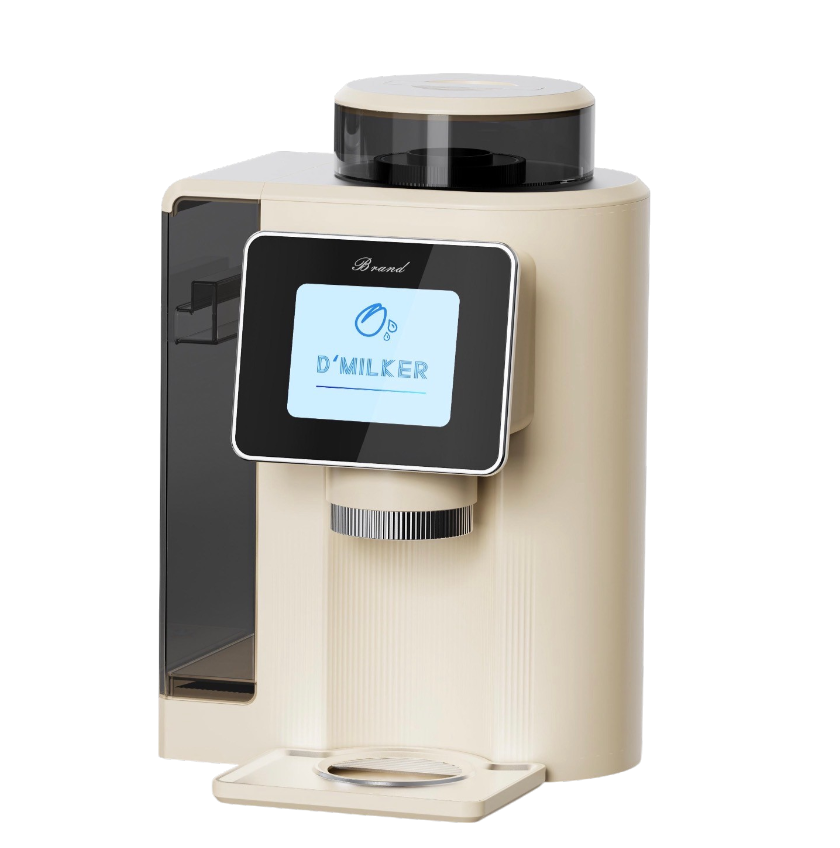
Know what goes into your food.
More freedom to choose ingredients and adapt preparation to personal preferences.
 D’MATRIX LAB
 · Our purpose
We believe people deserve to understand—and influence—what happens to their food.
D’Matrix is building a new generation of science-guided kitchen appliances to make carefully controlled food preparation accessible at home. Our purpose is to help people prepare food with greater confidence, choose their own ingredients, and build healthier habits into everyday life.
Backed by science. Built around people.
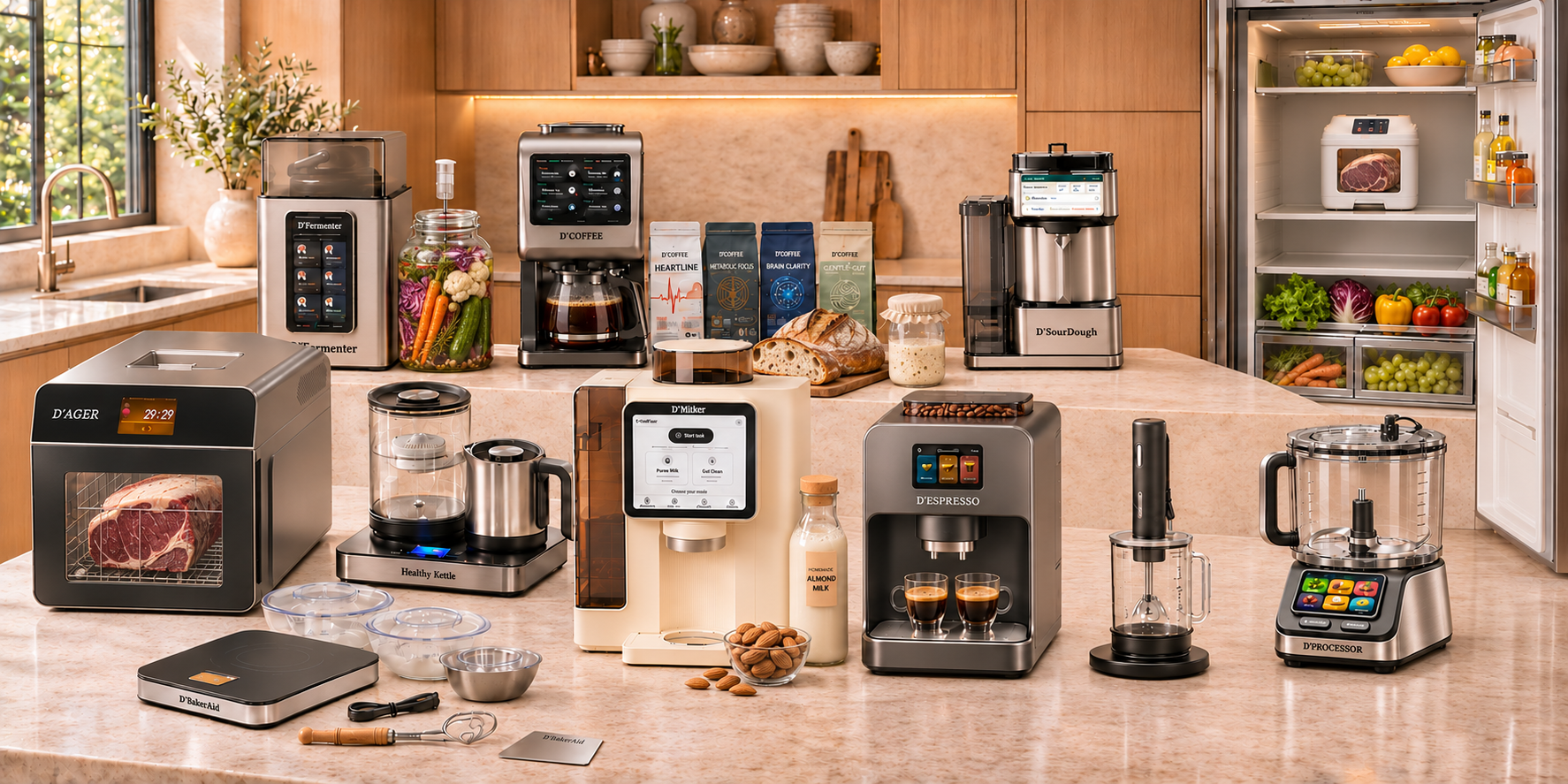
More freedom to choose ingredients and adapt preparation to personal preferences.
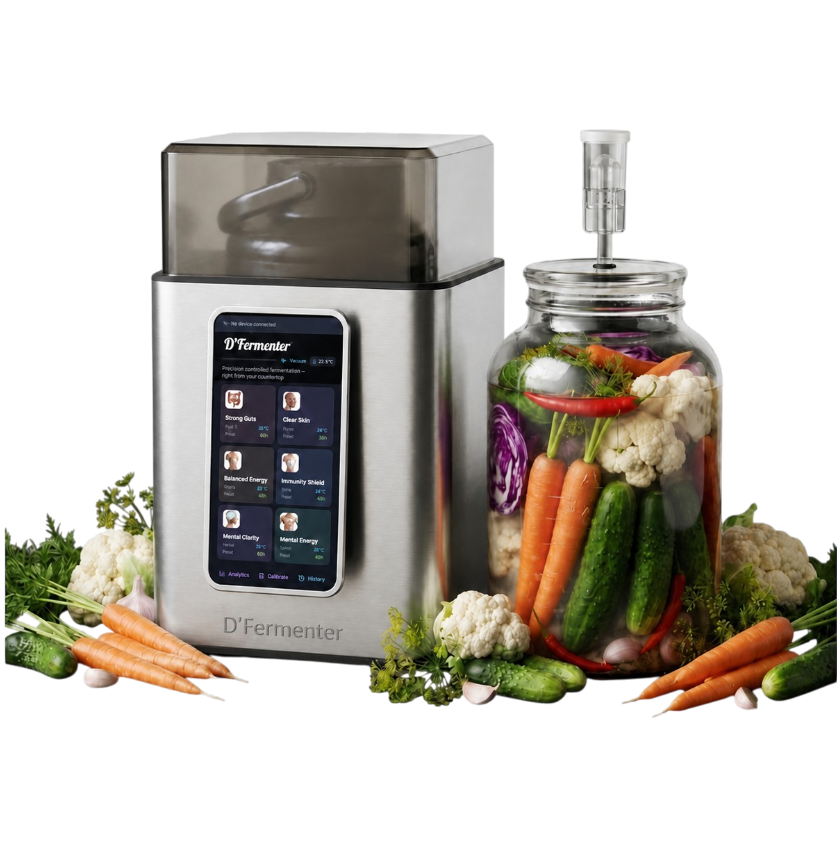
Guided preparation reduces the need to manage every temperature, timing and processing step manually.
Thoughtful design makes preparing food at home more approachable and repeatable.
D’MATRIX LAB · Company Presentation
D’Matrix Lab is building science-led kitchen appliances that give people greater control over how their food is prepared.
Our mission is to make precise food preparation practical, intuitive and accessible at home.
Behind the platform is Matrix Tech Development: an organization bringing together complex product engineering, electronics, mechanics, embedded software, applications and manufacturing execution in China.
We develop the complete product system—from its operating principles and user experience to the engineering files, production processes and quality requirements.
The problem we are solving
People want food that supports their health. Turning that intention into a reliable daily routine is the hard part.
Choosing fresh ingredients does not tell you whether temperature, time or oxygen exposure are right for the intended process.
Weighing, checking conditions and deciding when to stop can turn food preparation into a task that needs constant attention.
Ingredient quantities and starting conditions vary. Fixed instructions alone cannot respond to what is actually happening.
Separate scales, timers, probes and appliances leave the user responsible for connecting every step.
Our solution
Original mechanisms, sensors and control algorithms are designed together for the conditions each food process requires.
Clear touchscreen workflows, automatic controls and process alerts are designed to reduce manual monitoring.
Product-specific sensing and control logic are designed to adapt operation to measured conditions and defined endpoints.
D’Matrix integrates mechanics, electronics, firmware and user guidance across fermentation, aging, drinks and food preparation.
Our innovation: translating scientific process requirements into practical appliances people can use at home.
D’Fermenter · D’Ager · D’Milker · D’Coffee · D’Processor
Explore the inventions and product dossiers →Capabilities vary by product and development stage. Performance, nutritional and health benefits require product- and program-specific validation.
Sizing the opportunity
External research provides market context; D’Matrix’s opportunity is to serve people seeking greater control over food without adding complexity.
5.27%Forecast compound annual growth · 2026–2031
Our commercial thesis: make controlled food preparation easier to repeat, with visible process information and a clear everyday purpose.
The appliance estimate includes residential and light-commercial categories beyond our portfolio. It is market context, not D’Matrix’s addressable market or a sales forecast. Survey attitudes do not establish willingness to buy our products; that requires product, price and channel validation.
Commercial proof
Company-reported historical results for the first 220 days: 1,500 units sold and $480,919 net sales. The exact calendar reporting range and transaction-level reconciliation remain to be supplied.
These are historical totals, not a current monthly run rate. Dated monthly sales and reconciliation are needed before publishing a growth percentage.
What we are building
Our portfolio comprises 13 product systems at different stages of development.
Commercially launched
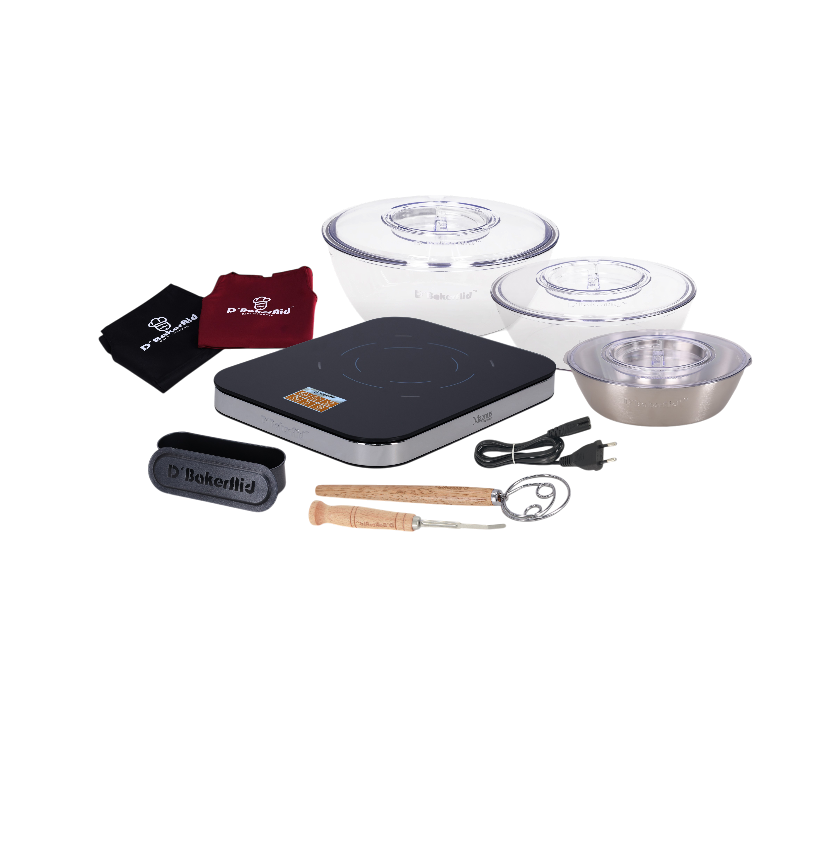
Guided yeast activation and dough proofing, combining controlled temperature, weighing and preparation programs.
Four priority launches
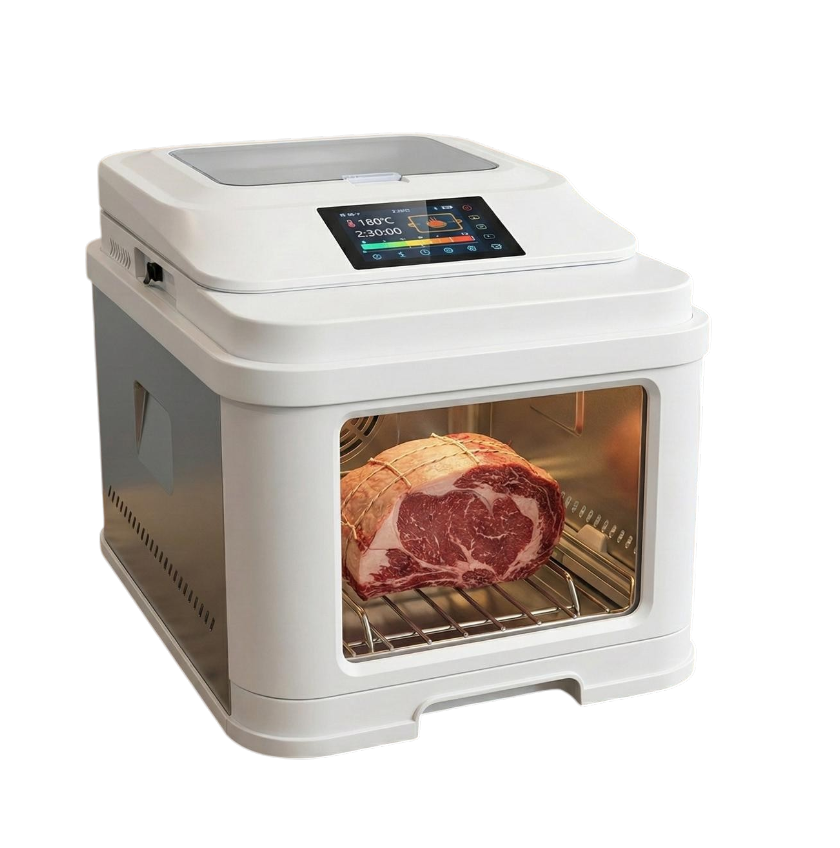
A controlled aging chamber designed to operate inside a refrigerator.
Four priority launches
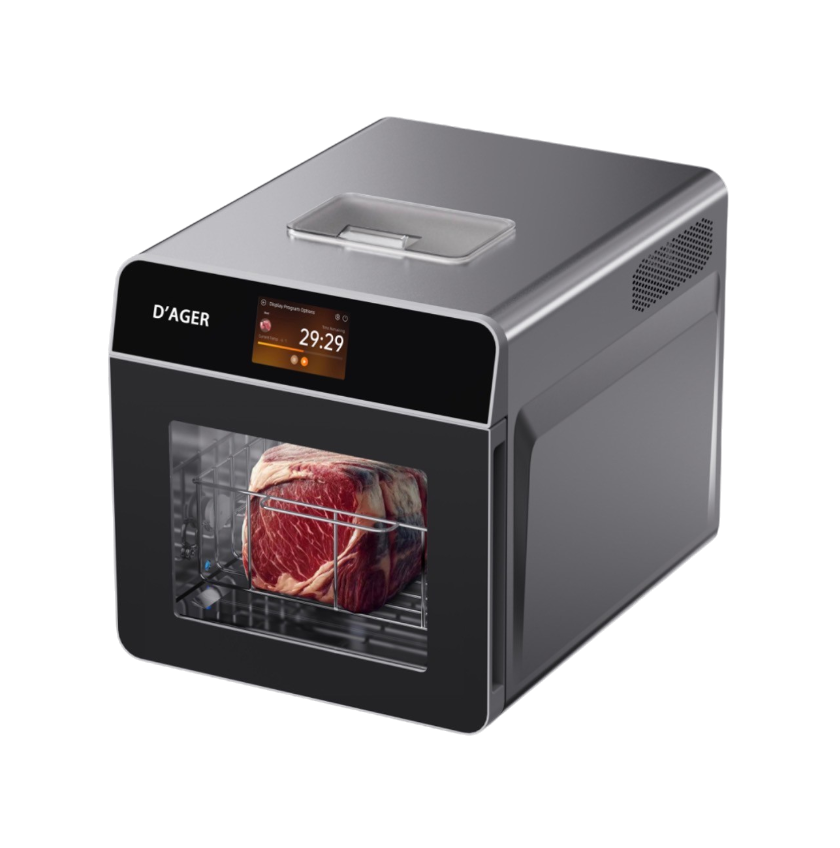
A standalone aging system with integrated environmental control.
Four priority launches
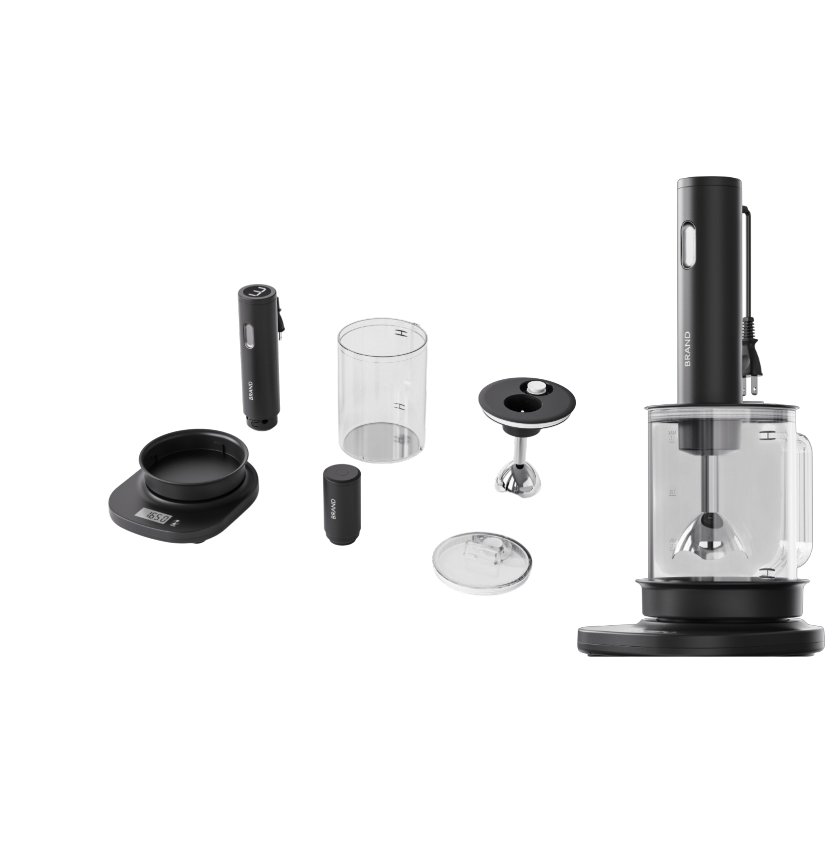
A blending platform integrating weighing and controlled preparation workflows.
Four priority launches
A guided fermentation system combining sensing, process control and endpoint monitoring.
08 · Eight follow-on systems
Prototype in progress
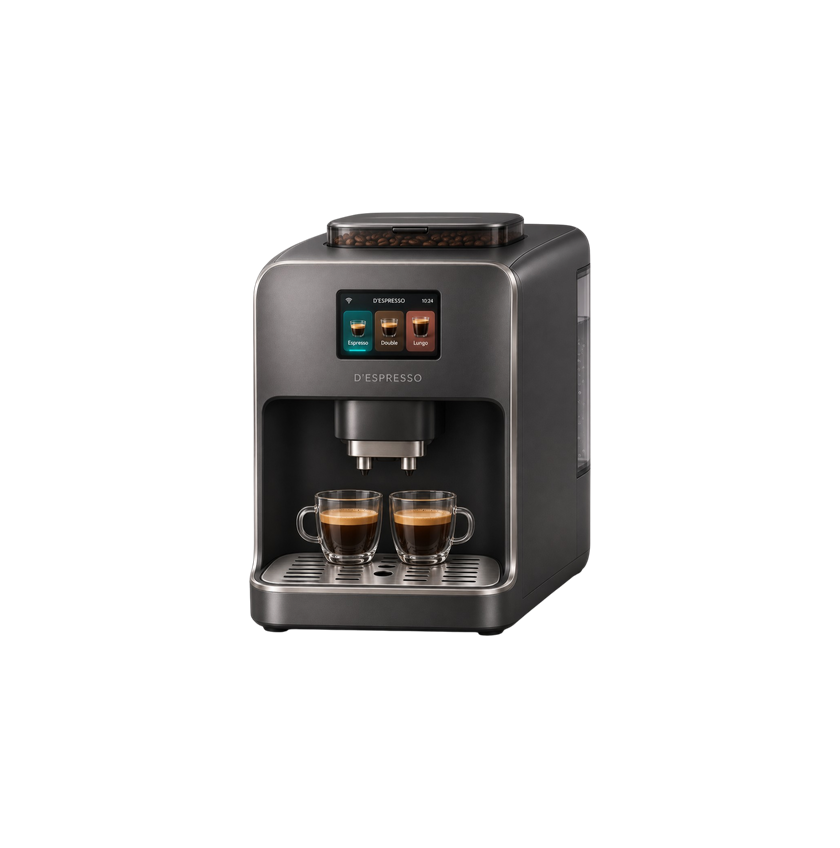
Structural design in progress
Development stages are company-reported. Product renders illustrate intended designs; final configurations remain subject to engineering and validation.
Explore the complete product-family dossierCustomer and business model
Health-conscious home-food consumers who want greater control over ingredients and processing, with guided tools for fermentation, aging, drinks and everyday food preparation. This is our target segment; demand for each new product must be validated.
The primary revenue source is product sales, through direct-to-consumer e-commerce and selected distribution partners.
Company-wide marketing introduces the portfolio, builds product-specific demand and supports cross-selling. Customer acquisition and contribution must be measured by product and channel.
Accessories, replacement parts, applicable consumables and potential licensing can add revenue after validation. They are excluded from the growth forecast shown below.
Market-sizing framework to validate, not a measured market total. Geographic reach, purchasing frequency and net prices require supporting evidence.
People and specialist partners
Founder and system leadership, core engineering and specialist partners come together around each development program. Direct contributors and external organizations are identified separately.
Leadership and core contributors

Founder · system leadership
More than 20 years of complex product engineering, electronics, industrialization and China manufacturing.

CEO · Matrix Tech Development
Company operations and manufacturing execution; 20 years in manufacturing and 100+ tooling programs.

Chief Engineer · Robotics & Structural Engineering
Leads six additional engineers in structures, robotic mechanisms, motion and production-oriented mechanics.

Hardware & Firmware
PCB, firmware, integration and reliability; 26 years of experience and 200+ projects.

Embedded Systems & Food-Science Integration
Specialist contributor connecting sensors, algorithms and software with food processes.
Specialist partners and external support
IoT, OTA, Apps & Electronics
Development partner for mobile apps, cloud connectivity, OTA, PCBA and electronics.
External IP & Patent Counsel · China
China patent strategy, international coordination and supplier/factory IP protection.
Corporate Lawyer · Matrix Andorra
Corporate governance, contracts and legal coordination for the Andorran company.
Accountancy & Financial Reporting
Accounting, tax coordination, reporting and payment-control support.
Independent Certification & Quality Assurance
Certification coordination, food-contact compliance, reliability and quality review.
Food-Science Partners & Consultants
Consultants in fermentation, bacterial research, lactic-acid processes and food development.
Client identities and confidential project details remain protected.
What the investment delivers
Complete engineering, validation, certification and tooling for the four priority products.
Target first manufacturing: 1,000 units per product, 4,000 units in total.
Planning assumption for retail availability after transit; begin measuring sell-through, acquisition cost, returns and contribution.
Validate commercial performance, approve repeat production against sales and available cash, and advance the next products through individual readiness gates.
Management plan from funded start, subject to execution and validation. Manufacturing completion is not customer delivery. Runway and repeat-order funding require a validated cash-flow plan.
See the full model and assumptions →The growth plan
Management planning estimates · Year 1 begins at funding · Net of discounts and allowances · Demand, costs and cash requirements remain subject to validation.
| The growth plan | Year 1 | Year 2 | Year 3 | Year 4 | Year 5 |
|---|---|---|---|---|---|
| Base scenario | $1.45M | $5.29M | $10.58M | $17.70M | $25.18M |
| Upside scenario | $1.45M | $6.62M | $15.87M | $30.98M | $50.36M |
D’BakerAid plus four new products. Six months to complete development, validation, certification and tooling; two months manufacturing; two assumed months for transit. Retail availability around month 10 after funding.
Introduce additional products and markets. Repeat production depends on sell-through, contribution and available cash. Ten priced products contribute by Year 3; three unpriced platforms are excluded from revenue.
Expand company-wide marketing and distribution as commercial performance is validated. The base case reaches approximately $25M in Year 5; $50M requires roughly twice the annual unit sales.
$50M requires approximately 138,000 units annually at the Year 5 product/channel mix and $362.33 average net revenue per unit. The modeled upside sells 139,000 units. This is a sales requirement, not validated demand.
The first 4,000-unit batch has $1.746M full-retail sell-out value and $534,200 provisional landed cost before the model’s cost reserve. At the initial channel mix, complete sell-out generates approximately $1.449M company net revenue before expenses. Year 1 assumes 2,500 of these units sell, plus 2,400 D’BakerAid units.
Management planning estimates. DTC net prices: 90% of list; distributor prices: 55%. DTC share moves from 80% to 55% of units. Company-wide marketing, payment costs, product-specific fulfillment, warranty/support and fixed operating costs are included. The model assumes improving acquisition efficiency. No accessory, subscription or licensing revenue. Forecasts remain subject to launch timing, demand, supplier costs, channel terms and cash-flow validation.
The revised $7M round allocates $1.895M to initial inventory at landed cost and $2.295M to company-wide marketing. The downloadable workbook retains the prior $5M funding baseline and supports the revenue assumptions only; it is not an updated $7M cash-flow forecast. Marketing deployment timing, monthly liquidity and any further funding needs require a revised cash plan. Over $3M invested historically is not available cash.
D’MATRIX LAB · Our purpose
Food is something we touch every day. We believe that makes it one of the most meaningful places to create change.
We have committed our time, resources and years of engineering experience to making scientific knowledge useful in ordinary kitchens. Behind every product is a question: can we give people a better way to prepare the food they share with themselves and the people they love?
Our ambition reaches beyond individual appliances. We want to make informed food preparation more accessible, more understandable and easier to sustain—one kitchen, one meal and one household at a time.
That ambition also carries a responsibility: to test carefully, communicate honestly and earn people’s trust.
The organization behind the platform
Matrix brings together the disciplines required to develop complex physical products and carry them toward manufacturing. Its work spans client development programs, specialist engineering, product improvement and production coordination.
D’Matrix applies that development capability to a portfolio of branded food-preparation systems, built around scientific processes, guided operation and reusable engineering.
Experience from development and manufacturing informs the platform. Developing our own products, in turn, strengthens our understanding of the complete journey—from an engineering decision to the consumer’s daily experience.
How our technology works
Each product begins with a practical question: which conditions must be measured and controlled for the intended process?
We translate those requirements into sensors, actuators, control algorithms, mechanical structures and clear user instructions.
Across the portfolio, engineering elements can be reused where appropriate: electronics, firmware architecture, interfaces, connectivity and manufacturing knowledge.
Shared engineering supports development efficiency. Each product still requires its own performance and safety validation.
Temperature measurements guide heater control during yeast activation and proofing.
Temperature and pH measurements inform process monitoring and program-specific endpoint decisions.
Our development capability
Requirements, feasibility, interfaces, risk management and target-cost planning.
Structures, mechanisms, thermal design, airflow, materials and production-ready geometry.
Power systems, sensors, controllers, circuit boards and electronic integration.
Device logic, operating programs, closed-loop control, diagnostics and fault handling.
Touchscreen workflows, iOS/Android applications, connectivity and OTA development.
Prototype testing, certification coordination, tooling, supplier qualification and production preparation.
A–Z project management connects these disciplines so decisions remain consistent with the complete product.
From engineering to production
For original development programs, Matrix controls the product definition, system architecture and STEP/STP/3D engineering package.
The tooling shop, component suppliers and assembly factory are selected around that product’s requirements.
Understand the user, commercial objective and technical constraints.
Establish requirements, architecture, risks and acceptance criteria.
Develop the physical product and user experience.
Complete detailed mechanics, electronics, software and documentation.
Coordinate appropriate filings and confidentiality controls before external disclosure.
Build and evaluate functional systems.
Assess performance, safety, reliability and compliance.
Qualify tooling, suppliers, pilot builds and approved golden samples.
Manage manufacturing readiness, inspection and corrective action.
IP planning begins early; filing timing and protection strategy are coordinated with qualified counsel.
What is established today
D’BakerAid provides experience in taking an internally developed product through manufacturing and into customer use.
The wider portfolio is progressing through engineering, prototypes and preparation for industrialization. Readiness is identified product by product.
The organization coordinates engineering, controlled documentation, suppliers and manufacturing activities across development programs.
Prototype photographs, test reports, patent certificates and verified commercial records will support investor diligence as they become available.
We distinguish what has been achieved, what is being developed and what remains a future objective.
The next chapter
Our next chapter is to complete priority products, validate their performance, prepare manufacturing and establish repeatable commercial execution.
The proposed $7M industrialization round supports that transition. The Investor Deck explains the funding allocation, milestones, growth scenarios and proposed investment terms.